Key Takeaways:
- Seeing winged “alates” means a new colony is trying to establish itself on your property.
- Termites have thick, straight waists and equal-length wings; ants have pinched “hourglass” waists and unequal wings.
- Termites actually eat the wood (leaving mud and grit), while ants only carve it out (leaving smooth tunnels and sawdust).
- Termite damage is significantly more urgent and structurally dangerous than carpenter ant damage.
- The easiest identification tip is the waist: tube-like for termites, pinched for ants.
Termites vs Flying Ants: What’s the Difference?
Flying ants and termites have many similarities. To the untrained eye, distinguishing between them can be a challenge. The most important thing to know is that, if they have wings, they’re called “alates,” which means they exist for the sole purpose of reproducing. They’ve left their old colony on a mission to breed and create a new colony – and if you see them swarming, there’s a good chance that new colony will be on your property.
So, how do you tell the difference between flying termites and flying ants? We’ll get into that – along with some tips on what to do about them, and how concerned you should be.
How to Distinguish Between Flying Ants and Termites
The key to controlling ants and termites is identifying the specific species causing the problem. While many ants grow wings at the “alate” stage, here in Thomasville, the most common type of winged ants are carpenter ants, so we’ll focus on those.
Here are some methods to distinguish between flying ants and termites:
Physical Characteristics
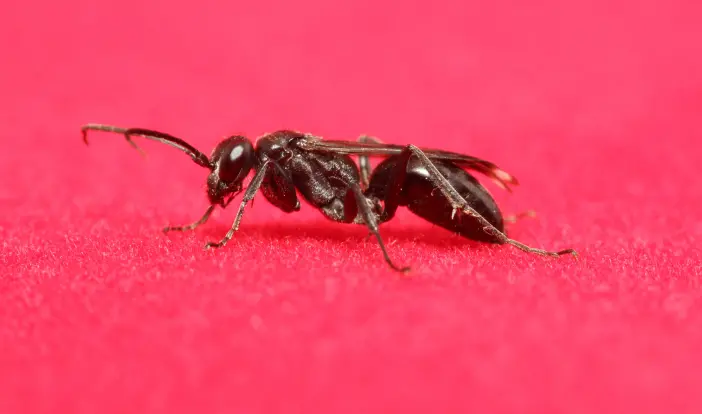
Carpenter ants and termites may share a similar size and have wings, leading to initial confusion. However, upon closer inspection, their physical differences become apparent. Ants have a distinct, narrow waist, bent antennae, and forewings that are larger than their hind wings.
In contrast, termites have straight antennae, a broad waist, and wings of equal size.
Visible Evidence
Termites and carpenter ants both leave behind damaged wood and “frass,” which are essentially droppings. While termites can remain unnoticed for years, tunneling deep within your home’s structure, carpenter ants are more obvious.
They don’t burrow nearly as deep as termites do, which means you’re more likely to notice the damaged wood and sawdust-like frass.
Diet
Interestingly, carpenter ants do not ingest the wood they excavate. Instead, their diet primarily consists of other insects, occasionally including termites.
In contrast, termites feed on the cellulose present in wood, allowing them to sustain themselves without needing to venture outside your home’s structural framework. Because they actually eat wood, termite damage is usually much more extensive than that of carpenter ants.
Habitat Preferences
While flying ants and termites might share common habitats, specific species exhibit unique preferences when it comes to their living environments. Termites are commonly linked with wet and decaying wood, as their dietary practices involve the breakdown of cellulose.
Conversely, flying ants display adaptability, thriving in diverse settings ranging from urban areas to forests.
Why Is It Important to Know the Differences Between Flying Termites and Ants?
To put it simply, one of these (termites) is a much bigger risk than the other. If you have termites, the capacity for damage is immense.
However, if it’s just ants (even carpenter ants), the situation is less urgent. While carpenter ants can cause damage to your house, the amount of damage they’re likely to cause is much less significant than termites.
Spot the Difference: Flying Termite vs. Flying Ant
Alright, let’s see if you can spot the difference between these two insects:
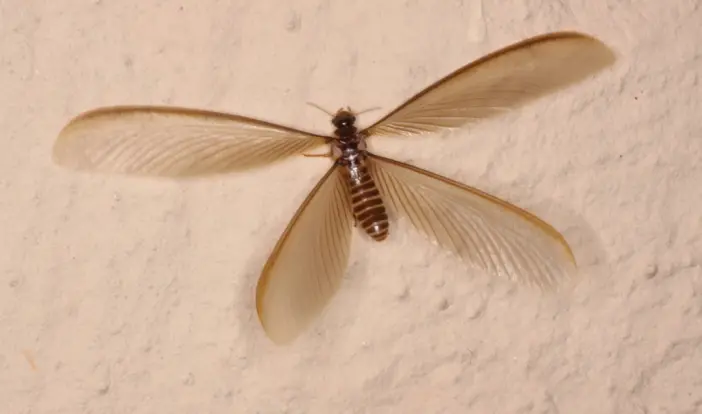
Photo credit: Derek Keats
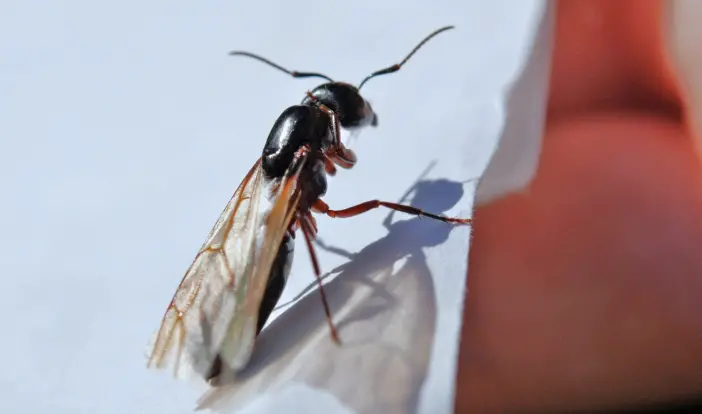
You can see that flying termites have four wings, all of equal length, while flying ants have two sets of wings (front and back) that are different lengths.
Let’s try a couple more:
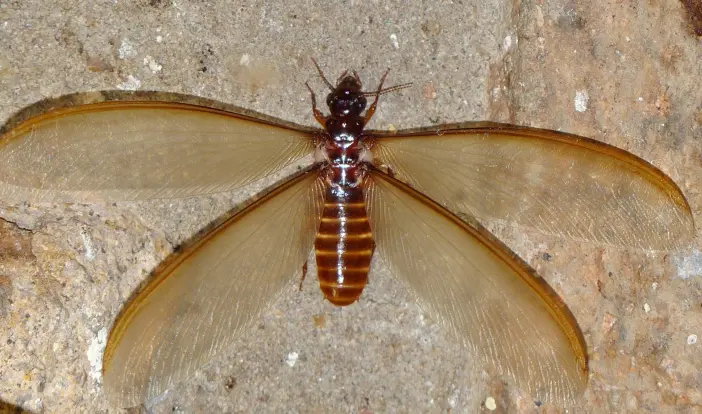
Photo credit: Bernard DuPont
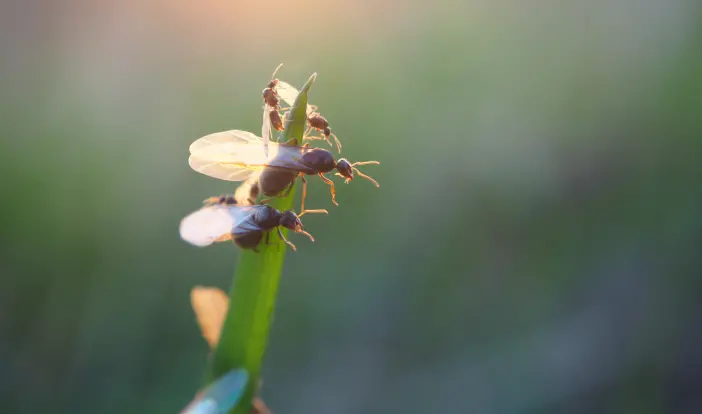
Notice that the antennae are subtly different, but different nonetheless. Flying termites have straight antennae, while flying ants have slightly elbowed antennae.
Finally, this:
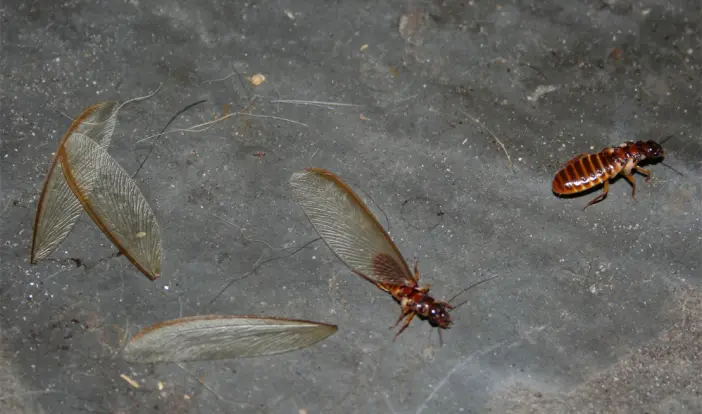
Photo credit: Discott
What’s the Easiest Way to Tell the Difference? Focus on the Waists
This is one of the easiest ways to learn how to tell flying ants and termites apart. Flying termites have tube-like waists of consistent thickness, while flying ants have narrowed or pinched waists.
Carpenter Ant vs Termite Damage
If you don’t see the insects themselves, the easiest way to tell the difference between carpenter ants and termites is the damage they leave behind.
What Should You Do If You Find Termites?
Whether it’s termites or carpenter ants plays a big part in what you should do next. If it’s simply carpenter ants, you should still make a plan to take care of the infestation ASAP. However, if it’s termites, it’s extremely important that you take action immediately.
Termite problems will only get worse if you ignore them. The longer they remain, the larger the colony gets, and the more damage they’re capable of doing to your home.
This is what you should do if you find termite swarmers or termites in your home:
- Avoid DIY Treatments: Store-bought sprays often just make termites move deeper into your walls rather than killing the colony. They can also split one colony into two.
- Save a sample: Catch a few in a jar or take a clear photo so an inspector can confirm the species.
- Keep the area as-is: Don’t tear apart the wood or disturb the mud tubes before the inspector arrives, as they need to see the active trails.
- Check for moisture: Fix any leaky pipes or clogged gutters immediately, as dampness is what attracted them in the first place.
- Call a professional: Termites require specialized equipment and chemicals that aren’t available to the public.
Confused About Termites or Flying Ants? Allow Us to Help!
Do you think you’ve identified termite swarmers in your home? Dixon Pest Services offers comprehensive termite solutions that will wipe the floor (and wall) with any termite invaders so that you can rest easy knowing your home is termite-free!
If termites or carpenter ants have invaded your home, you’ll need expert help for proper eradication! The most effective strategy against an infestation by wood-destroying insects is to get annual inspections with a trusted pest control company. Our team of skilled exterminators ensures a thorough evaluation of your residence, offering protection against termites and carpenter ants throughout the entire year.
Contact Dixon Pest Services today for professional help!
Back to Termite


