Key Takeaways:
- Noticing one or two ants indoors is rarely cause for concern. Occasional sightings often mean ants are scouting, but frequent appearances or ants getting into pantry items can signal a nest hidden somewhere in the home.
- How serious the situation is often depends on where the ants are showing up.
- Most ants found indoors are more irritating than dangerous, with Carpenter Ants and Fire Ants being the most important exceptions to that rule.
- Seeing winged ants, powdery wood shavings, or ants in seldom-used spaces like attics is a strong indication that professional ant control should be contacted right away.
Are Ants Inside Your Home a Reason for Concern?
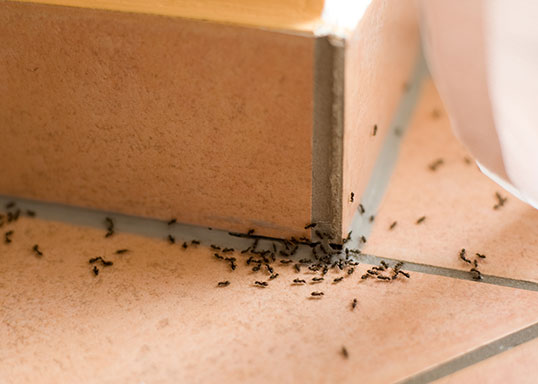
The severity of indoor ant activity can range anywhere, from a minor annoyance to evidence of a deeper issue. Spotting a lone ant crossing your countertop might be unpleasant, but it doesn’t automatically mean there’s a serious problem. In many cases, ants are simply passing through in search of food or water. When sightings become frequent or ants appear in unexpected areas, however, it may point to a hidden colony that needs to be addressed.
This guide is intended to help you distinguish between harmless ant activity and situations that require action, allowing you to determine whether basic cleaning will do the trick or if professional help is the best route.
Rating Your Ant Activity on a Scale
When ants show up indoors, the key question is whether they’re just foraging or have already established a nest. Identifying which scenario you’re dealing with makes it much easier to choose the right next step.
For homeowners in Thomasville, the occasional ant sighting isn’t unusual. Instead of reacting immediately, try placing your situation on a scale from 1 to 10, where 1 means “hardly an issue” and 10 means “professional help needed immediately.”
Level 1-3 (Minor Annoyance)
At this range, ants are usually more of a mild inconvenience than a true problem. Some people may barely notice them, while others find them annoying but manageable.
- What you might observe: A lone ant near a door, window, or baseboard, or a brief trail that appears after heavy rain or extreme temperatures. These sightings are typically sporadic and short-lived.
- Common species: Nuisance ants such as Pavement Ants or Odorous House Ants. They aren’t aggressive and don’t damage structures, though they’re drawn to food and moisture.
- What to do: Monitor the situation. Wipe down surfaces, remove crumbs, and watch for repeat activity. Often, the ants will move along on their own.
Level 4-7 (Consider Professional Support)
In this range, ants are no longer rare visitors. Even homeowners who are usually tolerant of pests may find the situation hard to ignore. Concerns often shift toward cleanliness, food contamination, and repeated activity.
- What you may notice: Ants appearing daily, or multiple times a day, inside food containers, on dishes, or consistently around sinks and countertops.
- What it often means: A hidden satellite colony may be established inside your walls, cabinets, or other enclosed spaces. At this point, the ants aren’t just scouting; they’ve settled in.
- What to do: Over-the-counter sprays may reduce visible ants temporarily, but they won’t reach the nest. Baits can help, but if activity continues, professional ant control is usually the most reliable way to resolve the problem and protect your home and food.
Level 8-10 (Reach Out Promptly)
At the highest end of the scale, ant activity can pose serious risks, including potential structural damage or safety concerns.
- Possible species: Carpenter Ants, which are often large and black, or Fire Ants, which are typically reddish-brown and highly aggressive.
- Warning signs: Winged ants indoors, often a sign of a mature colony, or small piles of fine, sawdust-like debris near baseboards, commonly linked to Carpenter Ant activity. These ants are frequently mistaken for termites, making accurate identification especially important.
- What to do: Fire Ants can deliver painful stings to people and pets, while Carpenter Ants can cause expensive wood damage over time. In both cases, professional treatment is the most effective first step.
What the Location of Ants Can Reveal About a Bigger Problem
Where ants are showing up inside your home can provide valuable insight into the severity of the issue. Spotting a lone ant near a front entry or garage is very different from finding a steady line moving through your pantry. We’ve created a breakdown of what ant activity in specific areas of your home can indicate.
Ants Found in the Kitchen
Kitchens are one of the most common places ants appear because they offer consistent access to food and moisture. Ants in this area are usually drawn to sugary spills, grease, crumbs, or standing water. While they typically won’t damage cabinets or appliances, their presence can contaminate food and compromise food-preparation surfaces.
Concern Level: Moderate.
Ants Found in the Bathroom
Bathrooms often attract ants that are seeking moisture rather than food. Ongoing sightings may be a sign of plumbing leaks, excessive humidity, or damp wood concealed behind walls, floors, or fixtures. These conditions are especially attractive to Carpenter Ants, which prefer moist or compromised wood and can lead to significant structural damage over time.
Concern Level: Moderate to High.
Ants Found in the Basement
Basements, particularly unfinished ones, often contain cracks, seams, and utility entry points that make it easier for ants to get inside. Seeing a few ants in this area usually means they’re passing through rather than nesting. If there are no clear trails or signs of ants moving into finished living spaces, sealing gaps and entry points may be enough to manage the situation.
Concern Level: Low to Moderate.
Ants Found in the Attic
Because attics are rarely disturbed, ant activity in this area often suggests that a colony has been active for a considerable time. Carpenter Ants frequently nest in attic insulation or wooden framing, posing a serious risk if left unaddressed. These infestations may remain hidden for months or even years, making professional inspection and treatment strongly recommended.
Concern Level: High.
Can Ants Cause Structural Damage?
Most ant species found indoors don’t cause physical damage to homes. Ants like the Little Black Ant are primarily interested in food and are considered nuisance pests. Carpenter Ants, however, are a major exception.
While they’re often mistaken for termites, Carpenter Ants don’t consume wood. Instead, they excavate it to create nesting tunnels, which can damage beams, window frames, and wall studs.
Over time, this activity can weaken key structural components. Fine, sawdust-like material near wooden areas is an important warning sign to watch for.
Are Ants Dangerous to People or Pets?
Most ants that you’ll encounter indoors pose minimal risk. Bites are uncommon and usually mild when they do happen.
Fire Ants are the exception. They are aggressive and may sting repeatedly when disturbed. Their stings are painful and can cause severe allergic reactions in both people and pets, making them a serious safety concern. If Fire Ants are present on or near your property, professional treatment is advised.
When Ant Activity Shouldn’t Be Ignored
In many situations, ants are more annoying than dangerous, and a few wandering ants aren’t cause for panic. However, ongoing activity, such as ants getting into food, winged ants, wood debris, or ant activity in the attic, should always be taken seriously.
If you’re unsure which type of ant you’re dealing with, or you’re ready to resolve your pest issues, Dixon Pest Services is here to help. We provide dependable ant control services in Thomasville, including accurate identification, thorough evaluations, and effective treatment solutions.
Contact us today to protect your home and restore your peace of mind.


